The Seven Classical Hands
Meet the Seven Hands
Elementary Hand
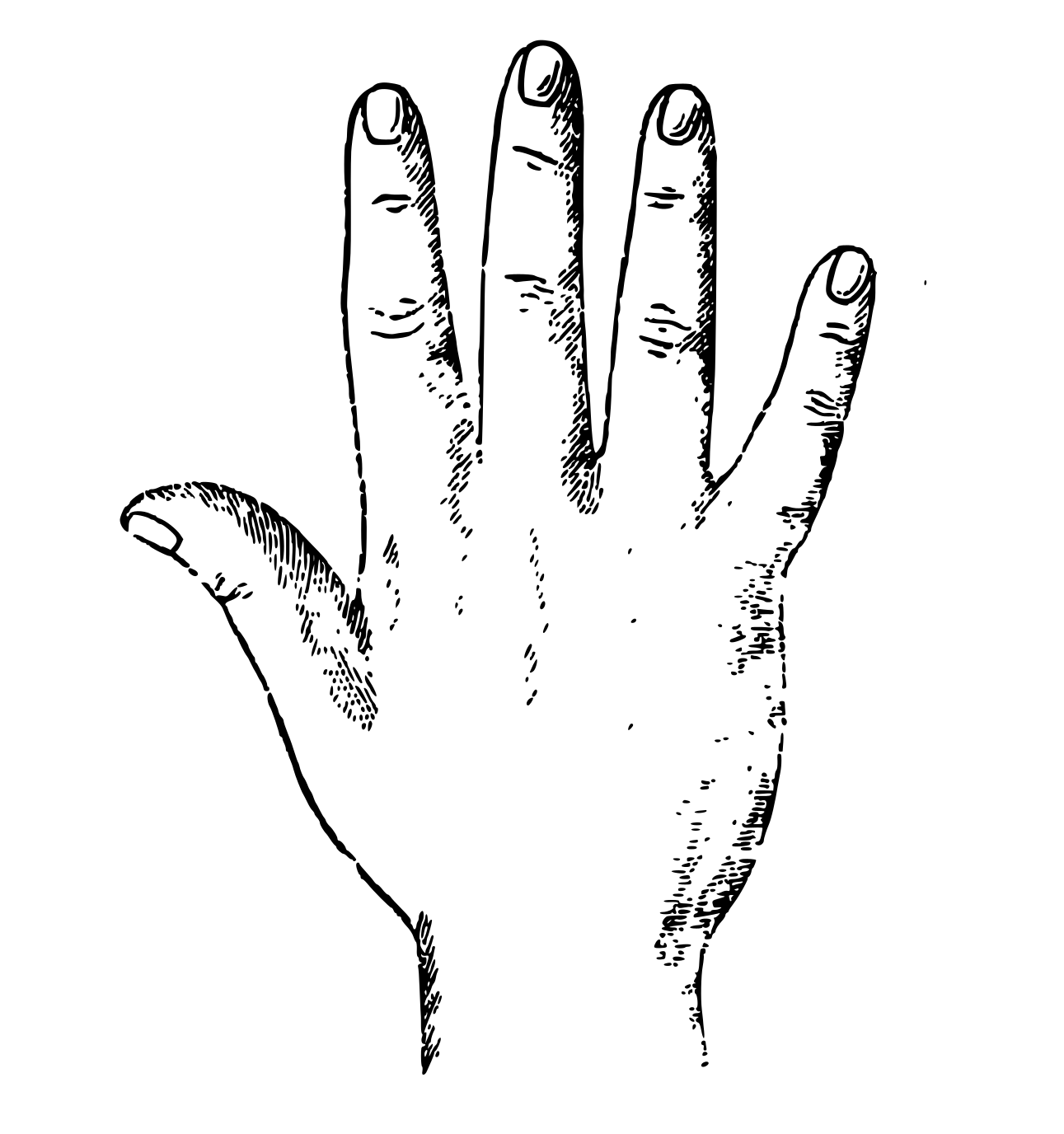
The first of the classical seven hand types — a thick, coarse, sparsely-lined hand, genuinely rare in practice and often mistaken for a plain Square hand.
The Elementary hand is the first of the seven classical hand types described in this tradition (alongside Square, Spatulate, Philosophic, Artistic, Psychic, and Mixed). A genuinely Elementary hand is rare among people in settled, literate societies — as moral and mental development advances alongside civilization, the true Elementary hand becomes uncommon; the text notes it was still found among certain polar and steppe peoples of its time. A common mistake is to call any Square hand with few lines or short fingers "Elementary" — that's usually wrong; the real thing is much rarer than that mistake suggests.
Spotting it: Palm thick and hard. Fingers noticeably short and misshapen relative to the palm. Thumb very small and unattractive, with the top phalange (near the nail) bent backward or otherwise deformed. Lines on the palm are sparse. Overall look is described in the source as unrefined, hard, or coarse.
From Hastarekha-Bichar (1935) — Elementary Hand
The source text (1935) goes further than physical description and ties the Elementary hand to specific social groups and to violent, animalistic character: it states that people with this hand type have little mental development, are "slaves to their impulses" unable to control base urges, find no attraction in art, poetry, or beauty, are naturally timid but become terrifying and blind with rage when angered — capable of violence without fear — and are easily overexcited, losing self-restraint. It states such people don't value logic or ambition, consider food and worldly pleasure life's chief purpose, and that blind faith, superstition, and "animalistic" tendencies mark their lives. It explicitly names manual laborers — servants, porters, laborers — as the social group whose hands fall into this category, and separately references "Tatar" peoples dismissively when discussing where genuine Elementary hands are still found. This reflects the class and ethnic attitudes of a 1935 Bengali text, not this course's own view of manual labor, class, or any ethnic group — kept here close to the original, as a labeled historical artifact, rather than rewritten into the course's own descriptive voice or silently dropped.
Historical record of the source text, not something this course teaches or the free reading uses.
Square Hand
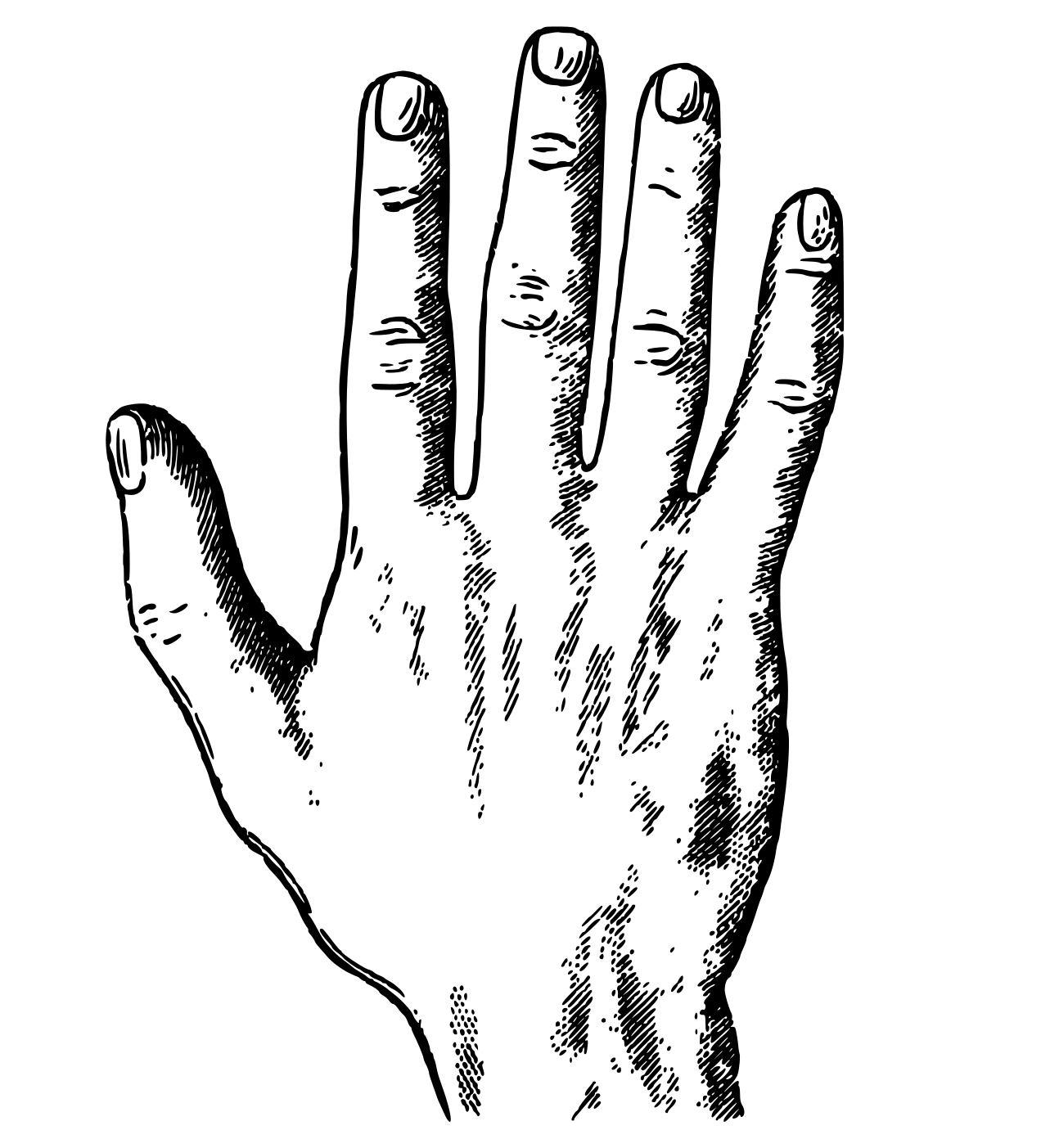
A palm that's roughly square across the wrist, finger-base, and both sides, with square fingertips and small square nails — the practical, disciplined, duty-first hand of the seven classical types.
The Square hand's defining trait is that the wrist, the base of the fingers, and both sides of the palm together form a roughly square shape, with square-tipped fingers and small square nails. Its owners are punctual and dutiful, and skeptical of the world of pure feeling — logic outweighs inspiration for them, and they're drawn more to work than to poetry or art. They love order and discipline. In religion, outward ritual attracts them more than new spiritual insight or subtle reasoning. They aren't especially original thinkers, but whatever they take on, they do wholeheartedly and thoroughly — firmness of mind, strong will, and persistence are their defining traits, and these often carry them to more real-world success than more naturally gifted or inspired people achieve. They favor the working world generally, especially business, agriculture, or any duty-driven field; they favor domestic/family life, and are simple-natured, sincere in friendship, and dutiful. Their one real fault: they try to reason their way through everything, and won't believe what they can't rationally grasp — so poetry or anything deliberately abstruse tends to leave them cold. A genuinely pure Square hand is uncommon; most real-world examples are mixed with a secondary trait, covered in the variants below.
Spotting it: Palm roughly square (wrist, finger-base, and both sides in similar proportion). Fingers generally square-tipped. Nails small and square. See interpretations below for how finger length and fingertip shape modify the reading.
Question 1 of 2
Which classical hand type is genuinely rare, even though people often mistakenly apply the label to any Square hand with short fingers or few lines?